Tuesday, May 26, 2009

Singapore Animal Welfare Symposium 2009 II

The Cat Welfare Society gave a presentation as part of the second panel session on Domestic Animal Welfare. It raised up our community's two main issues - that HDB allow cats to be kept as pets in flats and the reinstatement of the stray cat rehab scheme - amidst positive evidence of the effectiveness of sterilisation and a growing community of cat caregiving and advocacy in Singapore.

Can we make a cat auntie's dream come true?


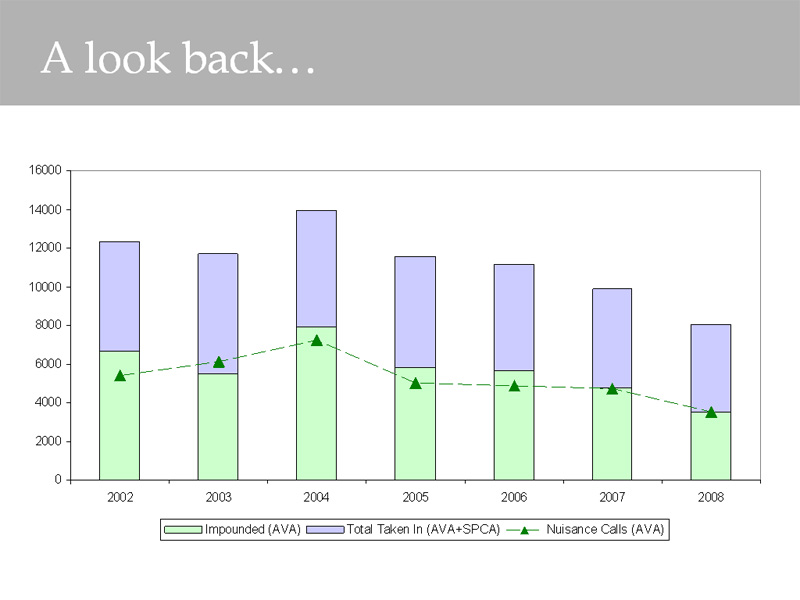
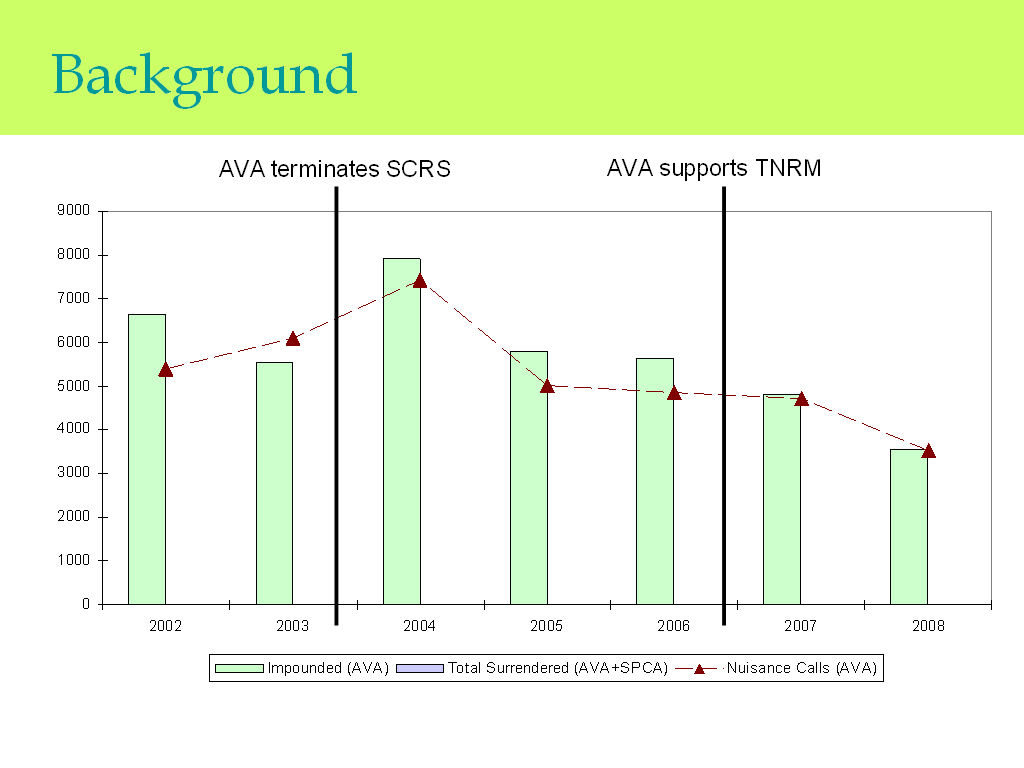
Since 2004, there has been a year on year drop in the number of cats surrendered and impounded.


Long overdue, these caregivers are starting to receive well-deserved recognition in recent years.
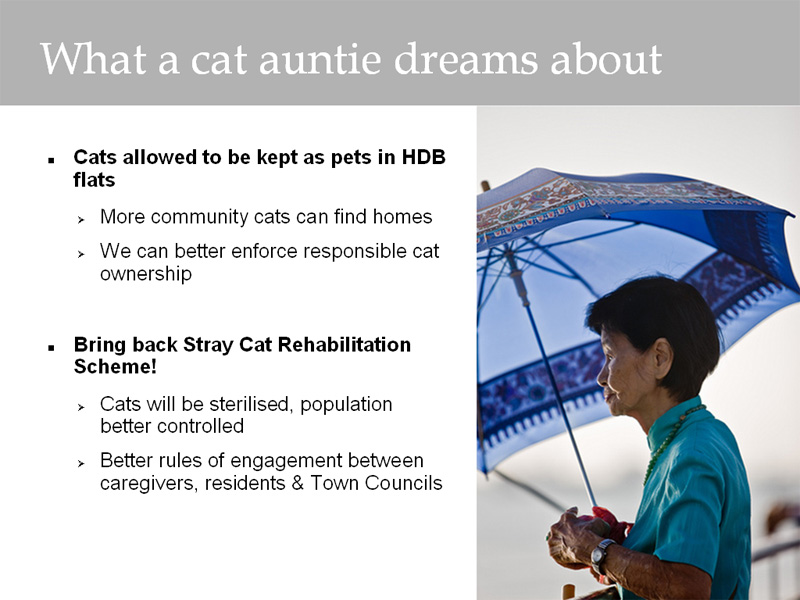

So, what do these community cat caregivers want? They want more eligible homes for community cats. And they want to know that their cats are safe from being indiscriminately caught and culled.


While stray cat population figures show that sterilisation is effective, what it doesn’t do is reduce the number of cat nuisance complaints, which is constantly cited as one of the reasons for resisting cat-friendly policies.
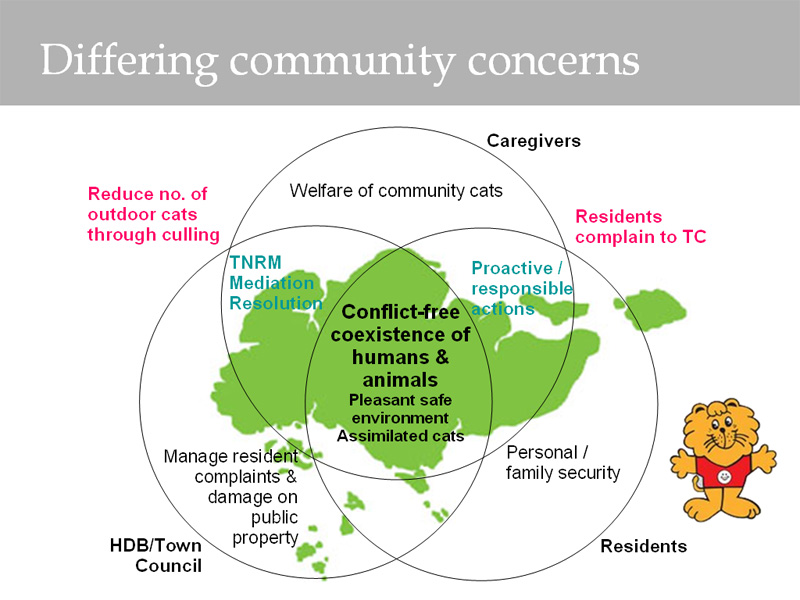

On the ground, there are many parties and their differing concerns to balance when trying to achieve an amicable level of human-animal co-existence. A lot of the resistance to the reinstating of the Stray Cat Rehab Scheme is from the town councils who are skeptical about how the scheme benefits them and also the additional workload that comes with administering the scheme.

(AVA confirmed that if they were to bring the scheme back, it would be in a decentralised form and only with the consent of the town councils.)

It reinforces the point that helping town councils reduce instances of human-cat conflicts is paramount in winning them over. And that is a task that CWS will take up this year. It is making plans to engage HDB, MPs and TCs and call for like-minded people in this community to come forward with inputs and support towards this campaign.


In contrast to the stray cat, stray dogs remain far less tolerated on our streets. The govt still does not recognise the same trap and neuter programme for our canine friends. Yet the pet dog trade trumps the cat anyday.

Singapore being a free market, the govt does not interfere with the market supply of pets from breeders or in pet shops. Many advocates argued that more must be done to curb the supply, especially in the face of a growing number of abandoned pets in Singapore, many more dogs and an alarming number of pedigrees.

This would be music to our ears certainly but as unlikely as it is that the govt will restrict the trade in pet animals, they must at least answer for how well these animal traders are being policed. It became clear that AVA relies on whistleblowing to keep these traders in check.

As the day progressed, several areas of overlap surfaced that animal welfare groups could potentially collaborate on:

1) Allowing more categories of pets to be kept in flats like cats and medium-sized dogs.
2) Regulating the loaning of traps to the public for errant cats and monkeys.
3) Policing of unscrupulous breeding and trading of animals.

To their credit, AVA indicated a willingness to continue the dialogue beyond the symposium on many of the issues raised. One person from the floor said it best. She asked AVA to tell us how we, the animal welfare community, can help them make some of these long-awaited changes a reality. And this is an opportunity that AVA cannot quite afford to pass up.

Students made up a large percentage of the audience at the symposium, many recipients of the animal protectors grant with an impressive showing at the event. These student leaders and activists with a passion for animal welfare are likely to become our next generation of veterinarians and advocates. If AVA wants these future leaders in their fold and not on the opposite side of the table, this is the time to engage them.

And what these students want is the confidence that the govt and its policies can change. More than that, what they want is to be part of the movement that leads and that inspires the conscience of this country for animal welfare and for conservation, not trail behind it. You can just see it in their eyes.

Friday, May 22, 2009

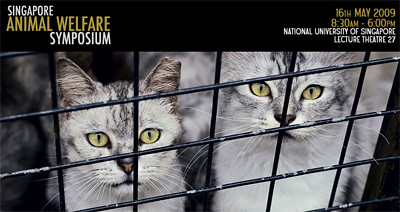
Singapore Animal Welfare Symposium 2009

The 2nd annual Singapore Animal Welfare Symposium was held last Saturday 16 May 2009 at the National University of Singapore. There were 2 panel sessions, one on Wildlife in Entertainment and the other on Domestic Animal Welfare.


Various issues were brought up about animal performances and arguments were bandied about the necessary public education and awareness aspect of these performances against the moral question about whether it is humane to train animals to perform unnatural behaviors for education, entertainment and revenues.
While this debate will certainly continue beyond the walls of the symposium, one pertinent question did come up that provides a practical handle on why rational sounding policies are so problematic when seen from the ground level. Senior-level management of entities like the Singapore Zoo and AVA, by nature of their profession and their position are grounded in a deep understanding of animal welfare issues and do, within parameters, aim to preserve and uphold these values on an organisational and national level.

Where it often falls apart is how these policies and values are translated on a day-to-day operational level. Which begs the question, is the staff on the ground reasonably qualified, indoctrinated and trained to execute these policies and practices with the same comprehension? The answer was that there is always room for improvement.

If improvement is what they seek, the animalfamily would like to highlight that this goes beyond the question of staff selection, qualifications and training, to empowerment. Is there sufficient empowerment for the staff to provide the kind of discernment and compassion on the ground that goes a long way on an emotional issue like animal welfare? Organisations dealing with animals certainly cannot be run like other govt agencies. Their ground staff cannot be like the many mindless administrators in so many govt offices, but be recognised and managed like what they really are, the keepers and custodians of countless lives every single working day.

I see two fronts that animal welfare advocates can and should pursue. One, to engage on a policy level, and the other, to hold agencies accountable for the execution of policies to a standard that even comes close to justifying their rationale.

There is a temptation for advocates to lump the two and to use unacceptable ground practices to make the leap towards calling for policy about-turns. And that’s where they run into a brick wall.

Ultimately, there is a time for discussing policy and there is a time to simply call out undesirable practices like use of withdrawal of food and coercion on performance animals and loaning traps without proper checks and investigation, for what they are - counter-intuitive to

# Safeguarding the health of animals, fish and plants.
# Building a positive image and enhance community outreach.
# Promoting animal welfare.
# Optimising the utilisation and return on resources.


Because they said it, we didn't.

(to be contd)

Tuesday, May 12, 2009

let's start a revolution

These are exciting times for cat welfare volunteers, supporters and activists. In the beginning, they started websites, then forums and they blogged. Now more than ever, they have organised themselves into a remarkably coherent voice for the common community cat in our communal void decks and on our collective streets.

The woman remembers that singular moment when her flame for cat welfare was fanned into burning scorching action. That was 5 years ago when Maneki walked into her life. Back then, it was tough to get started. Cat Welfare Society helped by providing starter packets of information but because there were never enough people to start a TNRM group in this area, it didn’t make sense for CWS to come down to conduct workshops or to make contact with the town council.

The woman had to find her own way, attend a TNRM workshop in NLB, loan a couple of traps, make herself useful to the town council officer and just get on with it.

Blogs and bloggers certainly helped along the way but cold hard information was tough to come by to paint a coherent picture of how we arrived at the present milestones in cat welfare, who are our minor and major movers in government and civil society and what are the common goals for the future.

It is truly only after Facebook and the flowering connections it proffered that this organically emerging animal welfare ecosystem in Singapore is crystallising in a way that this feline hopes will inspire progressive thinking and greater action in Singaporeans for us Singaporean cats. Facebook connects people, their human faces and their stories on a level that surpasses their carefully crafted words that make up websites, blogs and forums. This has done more to move bodies of knowledge around at great speeds without saying any much more than people are already doing.

So if you haven’t found your way onto the bandwagon, maybe this is the time.

This blog has been featuring links to other animal welfare groups in Singapore since forever, it also spots a blogroll that I have just split into a local list and the rest of the world so that it is easier to monitor our very own catty echo chamber of meows and grunts.

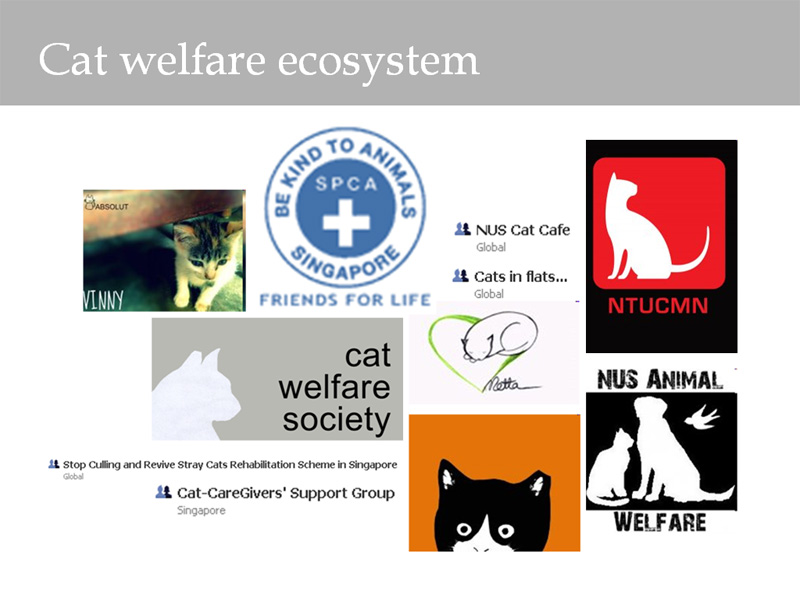
If you want to join the revolution that is happening online, here is a list of Facebook groups that you can hook up with for starters. Perhaps by chance or design, we might become mutual online friends and fans and I look forward to that.

Organisations
Cat Welfare Society Page / Group
SPCA Singapore

Issues
Appeal to the AVA to Stop the Free Loan of Cat Traps
Cats in flats...
Support Pet Shops that Do Not Sell Pets
Stop Culling and Revive Stray Cats Rehabilitation Scheme in Singapore
STOP the culling of stray cats!

Support Groups
Cat-CareGivers' Support Group
Cat Fosterers (Singapore)
TnRM (Singapore and Malaysia)
Singapore Adoption Group

Student Groups
Cats Management Network
SMU Paw
NUS PEACE! People Ending Animal Cruelty and Exploitation
NUS Cat Cafe

Other Groups
Cat Absolut
Paw Pledge
MettaCats
Blessing Home

General
Cat Lovers Singapore
Singapore Community Cats

Monday, April 27, 2009

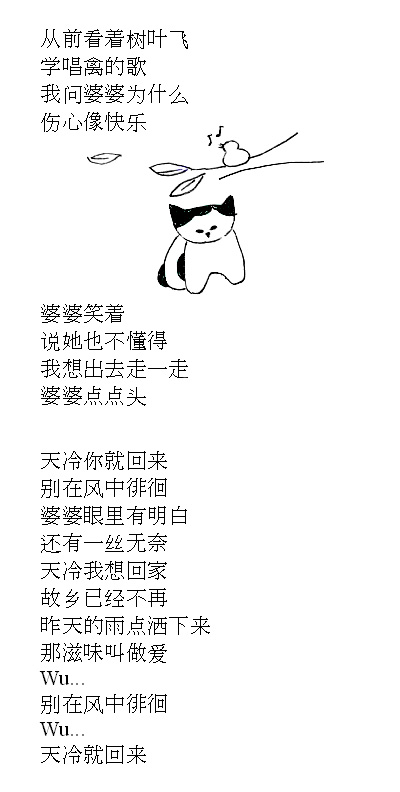
天冷就回來

the woman saw "if there're seasons" and fell in love with this liang wenfu song.

it made me think about little old ladies and their community cats. i dedicate this to them...

Saturday, April 04, 2009

we are more human in a crisis

The reality of 2009 has hit home. Charity organisations are looking at their financial year-end balance sheets and balking. Donors, volunteers, are looking long and hard at their own finances and commitments. Many have lost jobs.

Animal welfare is perhaps the hardest hit for its very nature. TNP recently threw a spotlight on a jobless man in Ang Mo Kio who has 80 stray cats under his care. Reactions to the story echo a general public sentiment that the jobless man and his kind are out of their blinking minds, spending money on CATS of all things in this crisis where so many people could use that extra lifeline. This sentiment spills over to animal welfare work on the whole.

It often escapes them that quite simply, cats don’t eat money, nor dogs, birds, sharks or whales. We might try it for a lark but still perfectly legal tender following a rinse after regurgitation.

We merely ingest a small measure of raw materials that money can buy. The bulk of the money spent goes right back to people, and lots of them. If spending is the way out of this crisis like we keep getting told, animal people are certainly no small part of that equation!


Lucky for us, our caregivers are legendary for their single-minded obstinacy. No job, no money but don’t even think about suggesting that they discontinue their feeding rounds or with TNRM. They know enough from watching their cats how to gnaw the thinking parts off a cold hard household pest.

These aunties and uncles are the very people carrying the brunt of a country’s uncertain economic future, but somewhere along the line, they rejected everything that this society has taught them and made the conscious, unwavering decision to focus on something outside of themselves rather than their own problems.

In a crisis, they become more resourceful, more willing to ask for help, forming their own network of collaborators and sponsors, and taking advantage of all available subsidies from organisations like SPCA and the Cat Welfare Society. And they are doing it in english, in mandarin, in malay, in tamil and several dialects.

The way a Toa Payoh caregiver sees it, “When you have money, you have no time. When you have time, you have no money.” So they go about joining the dots between the people with money and the people with time.

All the more, they look to animal welfare organisations to provide a level playing field with their programmes and subsidies. These organisations are able to connect recipients with donors on a far larger scale than any individual or group, to the combined tune of $110,000 last year for cat sterilisation alone. This is up from $90,000 from the previous year.

And they need to meet this growing demand in good times and in bad.

If you are surviving the crisis with a little extra in your pocket, please consider giving to the SPCA and the Cat Welfare Society. Cats don’t need your money but the uncles and aunties who love us do.

Tooty would like to thank the generous people out there who contributed to the hoarding case. In particular, Cat Welfare Society, Paw Pledge and the anonymous individuals all the more noble for their anonymity.

Tuesday, March 31, 2009

good news on the rehomed, the sterilised and the released

the rehomed
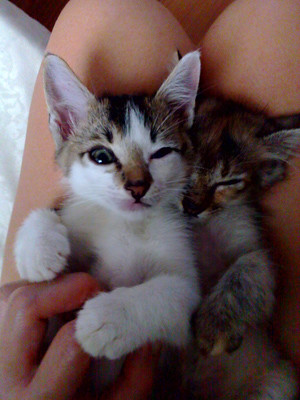
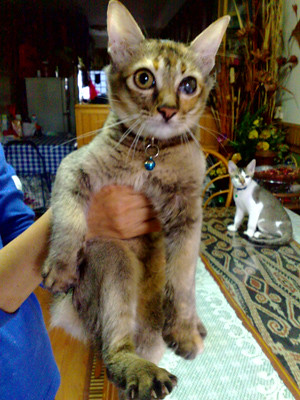
ah ma's conjunctivitis kitties grow from this,


to this.


afiq (in the background) has a squinty eye while putri has a cloudy eye. still, they are in the care of a loving extended family so it's as good as it gets. their siblings are faring just as well, one as a royal family pet and one with a mummy inspired to greater cat welfare volunteerism.

the sterilised
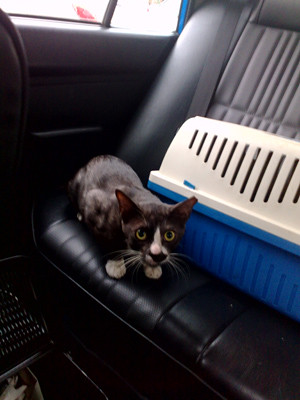
just out of surgery but look at him go. popped out of his picnic basket for a merry-go-round in mario's moving taxi.


wonder what the people in the car behind make of this.


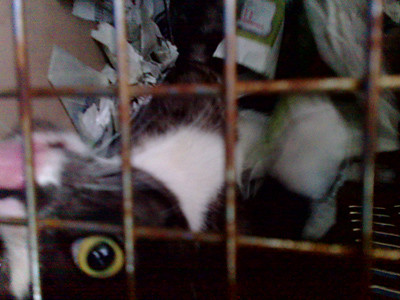
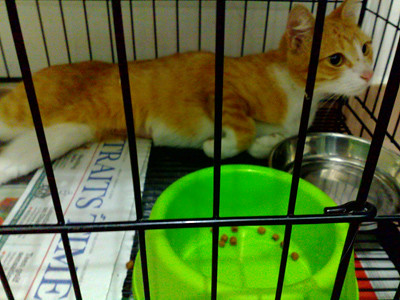
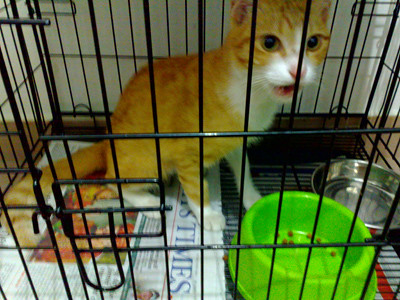
safely back in a more secured cage but still acting up, shredding the newspapers and lying on his back in defiance.


the woman had a bit of luck catching this one. he walked right up looking for food. but now, we are so waiting to let this constant whiner back out where you belong.

the released
auntie's released cats are doing fine. they get plenty of food and cat auntie company (definitely more than one, including the woman).


although one ginger with a knotted tail seems to be losing out in the pack. she bolts when she sees the woman and doesn't get to the food fast enough when it is left out. hope she gets her groove soon.

Saturday, March 28, 2009

animal hoarding in Singapore

City density does have its advantages. No animal hoarder has been left isolated and undiscovered long enough for the situation to spiral out of complete control. Usually an irate neighbour does everyone a service by blowing their horn.

Proximity to neighbours aside, it is probably also a reflection of our society that hoarders are kept from their irreversible slide from eccentricity to psychosis by their own tenuous but indissoluble family ties, and our wide-reaching government mechanisms. Their situations have hardly escalated to the kind of horror and devastation that are reported in bigger, more far-flung countries.

At least as far as we know.

Animal hoarding traits and types

Pet News Examiner Helena Sung provides an inventory of animal hoarding traits in her article What is animal hoarding? Psychological profile of a hoarder. They are used here to make a comparison of our two recent cases:


Yesterday, the Seletar Hills multi-cat home was featured in The New Paper. Are they borderline hoarders? It is hard to say without insight into their situation. But certainly the widely reported stench is worrying.

In most cases, hoarder caregivers are dealing with what the Hoarding of Animals Research Consortium identifies as an Overwhelmed Caregiver. Their self-esteem is linked to their role as caregiver. They have some awareness of their situation, have problems triggered by change in circumstances and yet are unable to resolve them effectively. This could happen to any caregiver, even the woman, and this is the category that Auntie falls under.

According to a HARC report, “the overwhelmed caregiver is more likely to respond to a softer, more therapeutically-oriented approach. S/he has greater insight that the situation is out of control, and may actually find some relief at the prospect of help and downsizing.” Also, threat of action from the authorities may be sufficient to reduce the likelihood of repeat offending.

Ah Ma is trickier. She leans towards being a Rescuer Hoarder, whose mission to rescue leads to compulsion. She takes an active rather than passive role to acquisition and believes she is the only one who can care for them. She also has an extensive network of enablers - neighbourhood people who think she is the best resort to leaving kittens and cats on the street and even compensates her with little gifts and donations for her ‘work’.

If Ah Ma’s case is anything to go by, verbal persuasion, even threat of action from authorities, is unlikely to be effective with this type of hoarder. They are paranoid and they do not take kindly to criticisms. Caregivers need to spend time and energy to gain their trust, usually by injecting large doses of flattery about their compassionate nature and tireless work.

The last type of hoarder we hope never to encounter. The Exploiter Hoarder is sociopathic, lacks empathy for people and animals, lacks guilt and remorse and has a need to control.

Local animal hoarding situation

No one has as yet looked into the local animal hoarding problem in any great detail. Perhaps there are nuances unique to our society. Certainly, we need to build up a set of tried and true intervention methods that works in this country. Currently, there are at least 5 cases (update: 7 cases) surfaced and handled by caregivers. With a growing aging population, increasing uncertainty of a globalised economy and widespread breakdown in family bonds, we can expect more cases ahead.

HARC recommends a multi-disciplinary approach that focuses the law, law enforcement, animal welfare organizations health department and social service agencies on this issue.

Right here, right now, there are just HDB by-laws, eviction letters and amateur caregivers. IMH has no answer, social services have no clue. Govt agencies have but two solutions, removal of animals or removal of said person and animals. Nothing is halting the hoarder's mental deterioration nor stopping the hoarder from repeat offending, leaving little room for preventing the suffering of the animals except with the promise of death.

A preliminary guide to hoarder intervention in Singapore

Ideally, hoarders are reconnected with their families when their situation improves. This is the case with Auntie, whose sister and niece's family have come to visit after the intervention.

In Ah Ma’s case when reconciliation is a long rocky road, the burden on the befriending caregiver is a big one. As these hoarders largely fall into the elderly or needy boxes or both, it is not unreasonable to expect involvement by befrienders, social workers, psychologists and counselors to reach a shared commitment to this problem. Yet none has been forthcoming.

Until they are, we need more Jaimes and Janets in Singapore. If you think you can fit into one of the roles below, please come stand with the giants and bring hope to these lonely suffering lives, on two legs and on four.

Monday, March 23, 2009

hoarder crisis averted – for now

It was inevitable. Our old hoarder neighbour got her eviction letter.

The woman negotiated with HDB to give her time to help resolve the situation, namely, the smell that caused an entire floor of residents to band together crying for blood. They gave her a week. Deadline: Today.

First visit

The flat had not had a change of air in years. There was no moving air as every single window was shut to keep the cats in and prying eyes out.

Both kitchen and yard sinks were clogged.

While the walls and tiles were yellow with age, the space at first glance did look tidy and neat but for the bits of cat biscuits scattered by moving paws. The old woman is a cleaner and really, no one can fault her for not cleaning her flat. She sweeps and she mops relentlessly. Unfortunately, she only cleans what she can see.

And no one taught her anything about cat litter. The cats were given a large metal cage, encrusted over the years with rust and dried shit. It had an unwieldy bottom tray that on the day of the woman’s first visit, was inch deep in cat urine. No litter, not even newspaper to soak it up.

The woman then inspected the toyogo boxes. In every one of them were pools of age old urine seeped through when the cats had good sense to avoid their designated litter space for greener pastures. Obviously, these boxes had not been opened for years as the old woman had no idea!

The woman’s nickname at Ah Ma’s is “Chu Liu Xiang” for being able to withstand the worst smells. This time, the woman’s eyes and nose went on strike with water pistols.

The cats

The old woman started with two and they bred to double digits. Fed primarily on Friskies, they are nonetheless all healthy, full-figured with thick coats.


But the woman witnessed the heartbreaking sight of a mother rejecting her babies. The old woman had to chase after her with the newborn, only to be rebuffed. One had already died and it looked like this one would not survive the night either. The place was no longer conducive for newborns and the mother knew it before the old woman did.

So intervention could not have come too soon and the cats were sterilised in a week-long mass logistical exercise. Three were pregnant.


It was apparent even to the old woman that she could not cope with this many cats so she released some of her cats downstairs under the auspices of our TC officer and our cat feeding community.

They are terrified of course but they will be looked out for. Whitey and Orange took turns to shield each other from loud noises.

The clean up

The grills went up on the windows for air.

Out went the cage. They saved what they could from the toyogo boxes, including some rather nice glassware and crockery, and chucked the rest. It’s a good thing this old woman is not the stubborn ox that Ah Ma is, adamant on keeping every shred of her croach-infested human history.

The TC cleaners came for the old rusted fridge and the rotten kitchen cabinet.

The plumber came, the painter came.

It was something the old woman never imagined. That she could have strangers come into her flat and it would be ok.


Although these two kitties were none too happy with the invasion!

The neighbours

The neighbours also came to look in on the commotion. One thought the woman was moving in.

It was a good opportunity to ask them for their understanding of the old woman’s situation. Obviously, no one knew she was alone with no children, looking after a retarded brother.

They in fact, came to their own conclusion that it was not possible to take away all the old woman’s cats without causing her much pain and suffering and finally only asked that the situation with the smell be resolved.

One neighbour even spoke up to say that even though she was affected, she would not complain against a lonely old woman, causing some sheepish looks from the others.

All in all, the situation still needs to be carefully monitored to assuage neighbourly frayed nerves. The HDB officer is giving her a second chance and we need to cherish it.

Monday, March 16, 2009

Thursday, March 12, 2009

cat abuse at choa chu kang

The 'worst case of cat mutilation' was discovered at Blk 550 Choa Chu Kang on Street 52 on 21 Feb 2009.

Last Sunday, a group of us went door to door in the vicinity to see what information we could find about the case as well as to ask the residents to participate in a petition for more security measures to be put in place in the area.

Most of the residents were not aware of what had happened in their neighbourhood, although a few had seen the SPCA reward posters on the notice boards or read the TNP article. But after being told what happened to the cat, many were noticeably shaken and eager to ask for something to be done.

This was not a case of a misguided hot-headed or frightened individual protecting themselves or their territory from an errant cat. Appalling as those cases are, many might shake their heads but ultimately, find no real bearing on their own safety. This crime on their doorstep is a grotesquely meticulous, pre-meditated act with a highly lethal weapon, very much the work of a troubled individual seeking release in the worst possible way. Enough studies have shown the correlation of such violence against animals to violence against humans and that message has made more than a few residents sit up and take notice.

And this was not an isolated case in Choa Chu Kang. Equally gruesome was the pregnant tri-colour cat found on 29 Nov 2008 at Blk 130 Choa Chu Kang Ave 1 with her stomach slit open and guts hanging out. That makes two cases in Choa Chu Kang where mutilation with a knife or sharp object is evident. Over the years in that estate, the caregiver has found and cared for countless more injured or dead cats, bashed in, run over by bicycles, thrown from high floors.


Statistics on animal abuse in Singapore number in the hundreds every year – 800 on average. Most of these are pet-related, outcomes of irresponsibility, negligence and plain old stupidity. These perpetrators are usually ordinary people with some vital deficiency and we know there are too many of them littering the earth. If education, threat of fines and public humiliation cannot get through to them, well, let’s hope there are enough busybodies in this world to call them out on their shortcomings.

Just as importantly, we need to take a magnifying glass to the actual number of violent crimes committed against animals every year and the mode of abuse. We’d like to think the individuals who would take these actions are few but they are also gallingly hard to apprehend. Better profiling and records can make all the difference. Perhaps SPCA or the police are monitoring these cases but as a lay person, the woman was not able to get much more information than the yearly reported statistics.

Hand in hand with that, we would like to remind people to report all abuse cases to SPCA or to the police, if only so that a comprehensive database of abuse can be built that might force authorities to take closer notice of this insidious underlying threat to society. It might one day even help build a case against a perpetrator.

As the woman was assigned the block directly next to Blk 550, she and another volunteer encountered quite a few households who heard distressed cat cries several nights in a row around the time the body of the kitten was found. Their hearts sank when they heard this. One young girl who told them about the cries was also visibly cut up. Let’s hope she never hears those cries again in her neighbourhood.

Saturday, February 28, 2009

conversations on cat welfare II

Several significant connections were made at the cat welfare meeting between active individuals immersed in cat management in one way or another – TNRM, rescue, fostering, feeding.

Beyond cat management practices, potential advocacy and education/awareness platforms were shared and discussed. These ideas are being ironed out before they can be usefully shared. There is one they can start working on that will benefit from inputs from the wider cat community – you.

They plan to produce and disseminate a smart little booklet for general public consumption. More specifically, for people who don’t like cats. The booklet will educate, entertain and more importantly, provide practical, humane solutions for avoiding cat encounters on the streets and on their lawns.

This, it is hoped, will work towards reducing human-cat conflicts. Working on it might even open cat advocators’ eyes to the predicaments of those who find us less than adorable, even sinister and menacing. Frustrating as their phobias and prejudices are, bashing them really hasn’t gotten us any further along in our goals of getting cats into HDB flats and for the government to stop culling. Satisfying, yes but here’s the much needed Plan B.

Through the next few weeks, drafts of the book will be put up on this blog for comments. The woman’s initial thinking is that it will be in a no-nonsense B/W format downloadable online, also easily printed on any printer by anyone and freely given out to family, colleagues and neighbours.

Owing to her animal welfare and eco interests, the woman has had the good fortune of meeting many socially conscious, passionate people like the cat activists and volunteers who attended “Conversations”. Justifiably, she has been encouraged to think that perhaps people in Singapore of her age and younger are differentiating themselves from those before them by becoming more engaged and more involved in the social and in the political.

If you think the same, you would be wrong. Findings from a recent study on local Y-Gen’s attitudes will knock you off your feet. Y-Geners (born 1977 to 1997) are found to be a very pragmatic lot – they want remuneration for their work. No surprises there. Yet while ability to make decisions and implement changes is cited as the main reason for choosing not to work for the government, a whopping 77% indicated that they should not have a voice/say in any government policies.

So let there be no lingering delusions of grandeur for us rabble-rousers. We have no audience. If the message is too robust for local sensitivities, we will be like a posthumously decorated JBJ making his final stand outside Raffles City, ignored.

That's why the book idea is worth a fair shot. Cat advocators need to speak the regular language of the general population and of the government. As important as words like ‘compassion’, ‘karma’ and ‘rights’ are, they really only work in novels, on TV series and in America. They don’t work in campaigns, on letters and in forums simply because they are too elusive, too vague to bridge the psychological gaps between the 23% and the larger 77%. we need grounded words like 'responsibility', 'co-operation' and 'mutual benefit'. It’s worth thinking about.

Thursday, February 26, 2009

continuing stroke of luck with new TC officer

We have a new TC officer and she is a cat-lover! There has been some complaints about the number of community cats in the estate but she lets it be known that the TC abides by the general rule that sterilised cats will not be removed.

The sun is finally shining on our estate.

But the area she is referring to is a problematic one that keeps us busy catching and sterilising every few months. There must be at least one chronic breeder upstairs if not more. The officer has spotted kittens in one of the corridors and the woman will hopefully be able to follow the lead this time to the culpable unit.

The woman also reconnected with a feeder who discovered an old hoarder in the neighbourhood. The old cleaner lives with her mentally challenged brother and 20 cats, although the number can’t be confirmed as the old woman opens her door only enough to speak through it. Even so, the putrid stench can fell a grown man. Only seasoned cat aunties like the woman and the feeder are able to stand their ground without so much as an involuntary nose twitch as they coax the old woman to let them sterilize and install grills for much-needed ventilation.

They met minor success when the old woman agreed to neuter her male cats. The whole experience brought forth geriatric tears as she passed the cats out to the woman one by one. It’s a start. She has still to relent on the females and help in cleaning and grilling. At least there will be no more new litters for now.

These are the small victories that the woman keeps her eyes on when the decision to fund cat welfare efforts becomes more complex in our present economic climate. Yet all the more, it calls for dedication and determination from volunteers and sponsors to stay the course. It will really be a crying shame if we let our collective labours be undone by a prolonged but ultimately temporary bad situation.


Ginger needs you!

Friday, February 20, 2009

conversations on cat welfare

the cat blogosphere has been ablaze with fresh activity since ava’s banal “no easy response to stray cats” rejoinder to the spirited TODAY feature on Dr Tan Chek Wee “the outspoken doc”.

the govt’s arguments about cats being a nuisance and hazard are laundered yearly right down to its bare threads and so past its sell-by date, it’s heartening to see people still with politically-correct words left in their defense. i only have one, @#%.

then the grisly discovery of 45 cats buried in seletar stunned the nation. cat lovers grieved. seletar residents fretted. cat non-lovers were appropriately respectful. the media prepared for a bonanza. and how the authorities must have braced themselves for an impending public relations problem.

true to fashion, TNP sold many papers with their provocative features on cat aids and Tony Tan Tuan Khoon. they freaked the public and gave Tony and cousin Choo their cringe-worthy airtime. but they also ignited a coherent campaign against govt funding and support for vigilante cat trapping by ordinary citizens that might actually stick.

it is a point worth driving home to the powers upstairs: rubber-stamping culling as a reasonable method of reducing strays spawns the likes of Tony, one civic-minded law-abiding poster boy no respectable govt agency wants to be associated with.

while the cat community keeps the dialogue alive on blogs, on forums, on facebook, perhaps it is time for a parallel approach. as we continue the battle of words, letters and petitions, perhaps it is time to see it from the govt’s perspectives and offer concrete solutions to the sticky issues that they cite time and again as deterrents towards more progressive and humane policies. and this may actually require working alongside the govt to tackle their pet issue – reducing public complaints on strays. it’s a tall order but one worth pursuing.

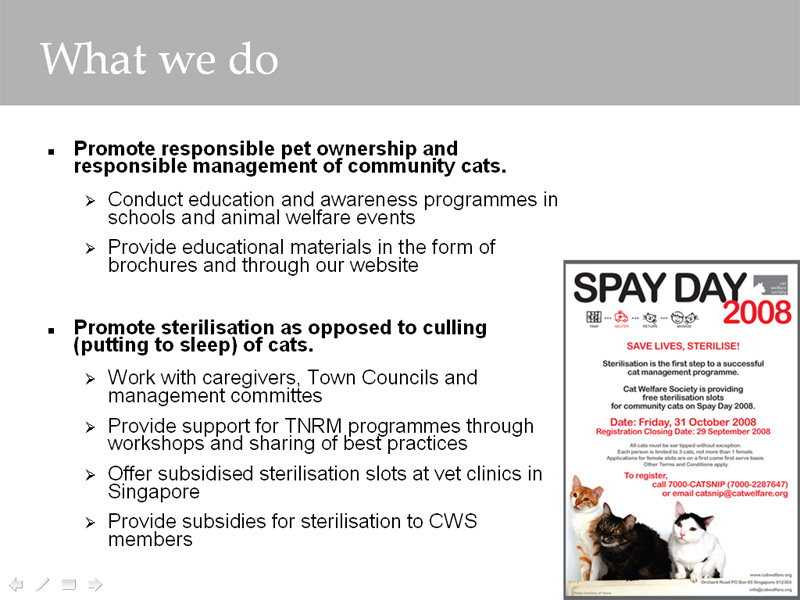
already, AVA numbers show a definite down trend in nuisance calls. CWS should take the credit for that for their relentless effort in engaging TCs and AVA, providing support for caregivers and channeling resources to education, mediation and to sterilisation. that barrel needs to keep rolling.

and still there is always room for fresh ideas and platforms if the right people can come together on it. and that is where “Conversations on Cat Welfare” comes in. we are meeting tomorrow 21 Feb 3pm at Food#03 on 109 Rowell Rd.

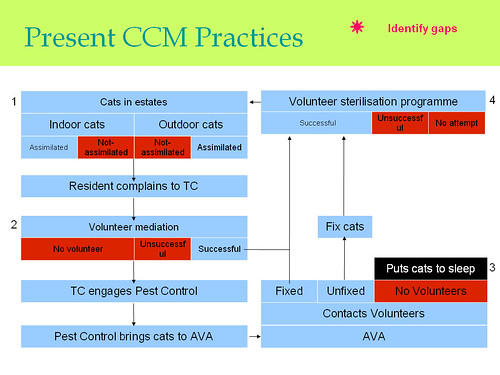
this informal meeting hopes to identify current gaps in cat welfare practices, areas of collaboration and ultimately spin off projects that will help the cause. these can eventually be taken up individually or collectively.

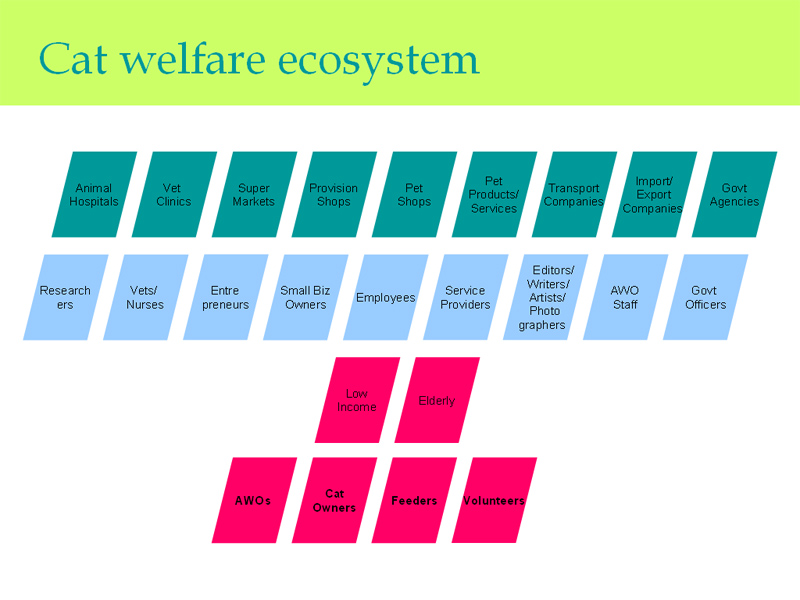
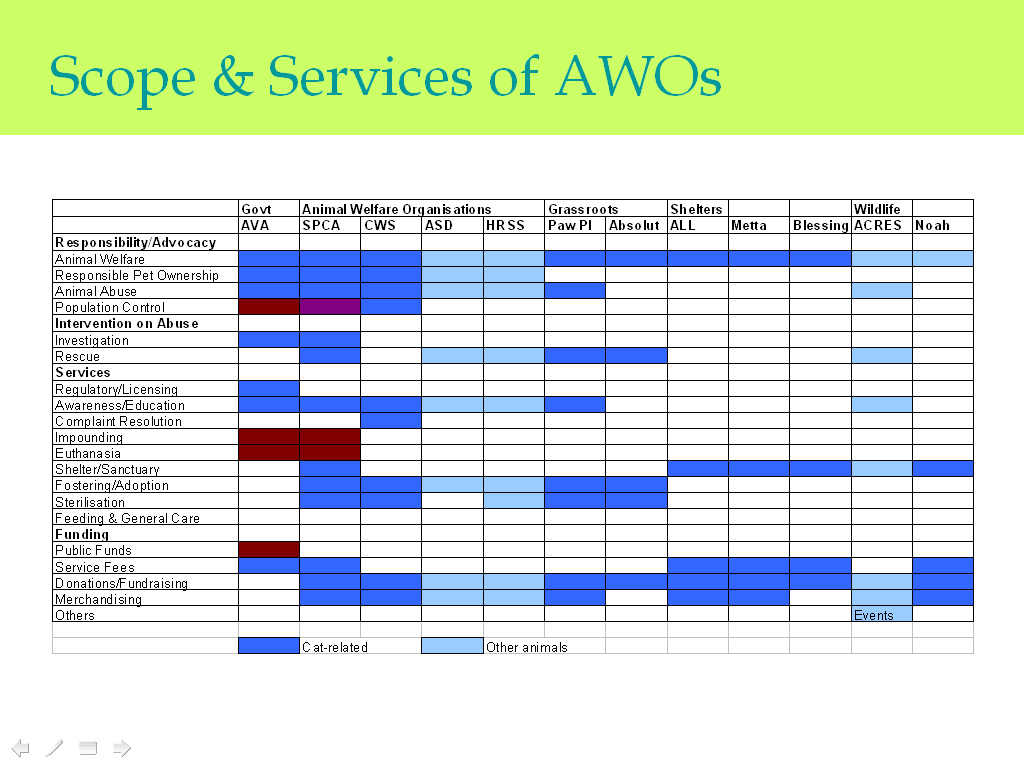
to start the ball rolling, some information has been collated to provide perspective on the cat welfare ecosystem in singapore. this is by no means complete and inputs are welcomed to make this a robust repository for the benefit of everyone. if anything, our message is that it is time for the cat community to work together despite differences, share information as much as possible and to support each other’s ideas and efforts, because the stray cats downstairs can only benefit from more of them, not less.

click on images to enlarge
CCM = community cat management
AWO = animal welfare organisations


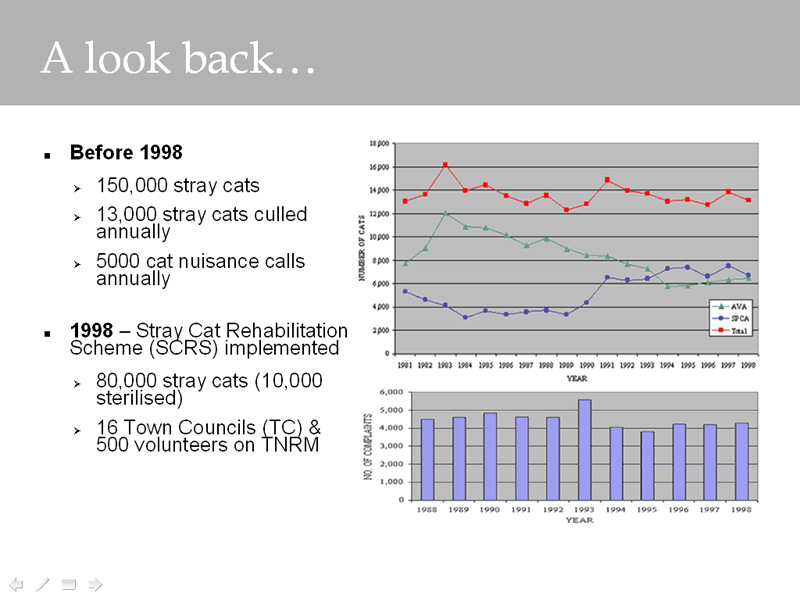
Before 1998
*150,000 stray cats
*13,000 stray cats culled annually
*14,000 cat nuisance calls

1998 – Agri-Food & Veterinary Authority of Singapore (AVA) (then PPD – Primary Production Dept) implemented Stray Cat Rehabilitation Scheme (SCRS)

2001 – 28,000 stray cats impounded

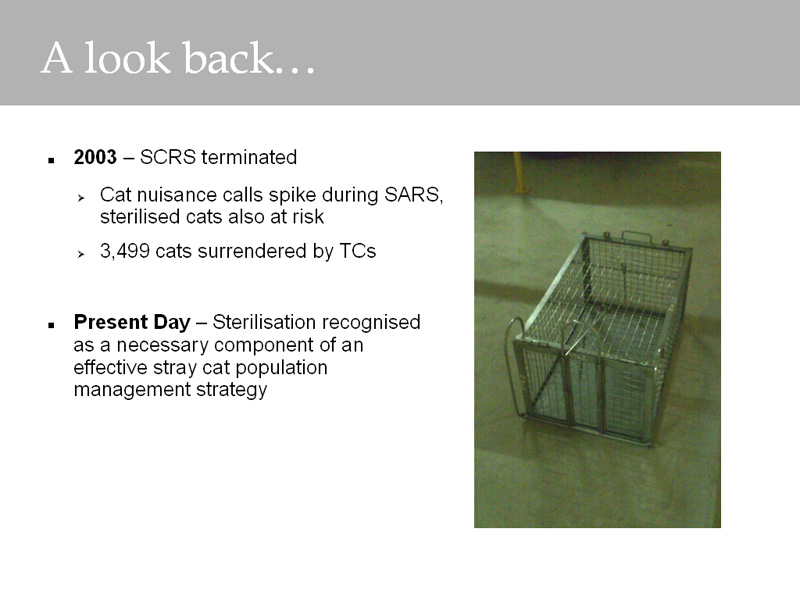
2003 – AVA terminates scheme
*80,000 stray cats (10,000 sterilised)
*16 Town Councils (TC) & 500 volunteers on TNRM
*Cat nuisance calls spike during SARS, sterilised cats also at risk
*AVA & TCs culling bill up 20% ($62,000) to $598,944 to catch and cull 7,682 cats and 4,744 dogs

2006 – AVA supports sterilisation by volunteers with subsidy and communication to TCs


if you have an interest in cat welfare, feel free to come join us.
 

blogger templates | Make Money Online